

Hear the stories from real patients living with chronic GVHD and learn about their treatment experience with REZUROCK. Individual results may vary.
Jen’s Journey

In this video, Jen shares her personal journey and experience with REZUROCK.

Jen: Hi, I'm Jen, and this content is sponsored by Sanofi. I'm a real patient, and I've been compensated by Sanofi to share my personal story living with chronic GVHD. Everything I share is my personal experience and individual results may vary. Be sure to speak with your doctor.
Onscreen Text: Jen’s story reflects her real life experience with chronic graft-versus-host disease. However, individual experiences may vary and are not necessarily representative of everyone’s experience with REZUROCK.
Jen: So I was, 36 at the time, I ended up getting sick. I thought I had the flu, or mono or something. I just couldn't shake it. It just wasn’t going away.
Onscreen Text: Jen Lankin Living with Chronic GVHD Paid Sanofi Spokesperson
Jen: They finally did some blood tests on me and it turned out I had acute myeloid leukemia.
Jen: And they realized that I needed to do the bone marrow transplant, that chemo wasn’t going to be enough to keep it away.
Jen: Rob and I had been dating for about nine months when I was initially diagnosed with leukemia. I was like, listen, you don’t have to stay you didn’t sign up for this.
Rob: I didn't even have to think about it. I love Jen. I knew I needed to be there for her.
Onscreen Text: Rob Lankin Jen’s Husband
Jen: He has just been the support system throughout the entire process. He drove me to the hospital when I was initially diagnosed. He stayed overnight in the hospital with me day after day, after day, after day. And I think it just solidified that we were meant to be together.
Rob: And I said, Jen, let's be married before you come back in for your bone marrow transplant.
Jen: So I would try on the dresses for the nurses and they were like, this one's good. This one's, you know, we love this one. And they helped us helped me figure out what dress to wear.
Jen: The following September, I received the bone marrow transplant. I was in a hospital room in isolation for weeks and weeks and weeks. That was like the most sick that I felt throughout the whole process.
Jen: Then a year and a half later, I had to undergo a mini transplant it’s called a a donor lymphocyte infusion but with that second transplant that’s when the doctors really started using the term chronic graft-versus-host disease, which I eventually developed. That’s when the seriousness of the situation really kind of set in.
Onscreen Text: Graft-versus-Host Disease (GVHD) is a common complication that can occur after an allogeneic bone marrow or stem cell transplant.
Jen: At the time, we used a variety of like different medications, treatments because the chronic GVHD hit so many different body systems.
Rob: The eyes, your lips, your lungs, your skin, your muscles.
Jen: And I felt like I had little control over how I could manage that.
Jen: After two failed systemic treatments, my doctor and I discussed REZUROCK. It was exciting, and it offered a little glimmer of hope.
Onscreen Text: Remember, individual experiences may vary. Be sure to speak with your doctor.
REZUROCK® (belumosudil) tablets is for patients 12 years and older with chronic graft-versus-host disease (chronic GVHD) after 2 prior systemic treatments did not work.
Please see additional Important Safety Information throughout this video and full Prescribing Information at the adjacent link.
Jen: Our family we just really appreciate time that we get to spend together. I think that’s been a lesson to all of us is just to be grateful for all these little things that you do have.
Jen: REZUROCK is an effective treatment for me.
Onscreen Text: Please see additional Important Safety Information throughout this video and full Prescribing Information at the adjacent link.
Jen: The most common side effects of REZUROCK are infections, tiredness or weakness, nausea, diarrhea, shortness of breath, cough, swelling, bleeding, stomach pain, muscle or bone pain, headache and high blood pressure.
Onscreen Text: These are not all the possible side effects of REZUROCK. Speak to your doctor for medical advice about side effects.
Please see additional Important Safety Information throughout this video and full Prescribing Information at the adjacent link.
Rob: Balancing life with someone going through cancer and then chronic GVHD, is something that you don’t think about. You just do what you have to do.
Onscreen Text: Please see additional Important Safety Information throughout this video and full Prescribing Information at the adjacent link.
Jen: I can't imagine doing this by myself. I don't think I would be here if I was alone. When we were in the hospital, we got to see how other people reacted to adversity and challenges, that was motivational and inspiring. And it's like, okay, I want to be that person I don't want to be like the person that is going to give up.
Onscreen Text: Please see additional Important Safety Information throughout this video and full Prescribing Information at the adjacent link.
Jen: It is the hardest thing my family has had to experience and it’s not something you ever expect to happen to you.
Onscreen Text: Please see additional Important Safety Information throughout this video and full Prescribing Information at the adjacent link.
Jen: I think my biggest inspiration are my children. You know, I want to be there for them. I want to see them graduate from high school, which they just did. So those girls really are like the driving factor in my life.
Onscreen Text: Please see additional Important Safety Information throughout this video and full Prescribing Information at the adjacent link.
USE:
REZUROCK® (belumosudil) is a prescription medicine used to treat adults and children 12 years of age and older with chronic graft-versus-host disease (chronic GVHD) after you have received at least 2 prior treatments (systemic therapy) and they did not work. It is not known if REZUROCK is safe and effective in children less than 12 years old.
IMPORTANT SAFETY INFORMATION
Before taking REZUROCK, tell your healthcare provider about all of your medical conditions, including if you:
-
have kidney or liver problems.
-
are pregnant or plan to become pregnant. REZUROCK can harm your unborn baby. If you are able to become pregnant, your healthcare provider will do a pregnancy test before starting treatment with REZUROCK. Tell your healthcare provider if you become pregnant or think you may be pregnant during treatment with REZUROCK.
– Females who can become pregnant should use effective birth control during treatment with REZUROCK and for 1 week after the last dose.
– Males with female partners who can become pregnant should use effective birth control during treatment with REZUROCK and for 1 week after the last dose. -
are breastfeeding or plan to breastfeed. It is not known if REZUROCK passes into breast milk. Do not breastfeed during treatment with REZUROCK and for 1 week after the last dose
Tell your healthcare provider about all the medicines you take, including prescription and over-the-counter medicines, vitamins, and herbal supplements. REZUROCK may affect the way other medicines work, and other medicines may affect the way REZUROCK works.
Know the medicines you take. Keep a list of them to show your healthcare provider and pharmacist when you get a new medicine.
How should I take REZUROCK?
-
Take REZUROCK exactly as your healthcare provider tells you to take it.
-
Do not change your dose or stop taking REZUROCK without first talking to your healthcare provider.
-
Take REZUROCK 1 time a day with a meal.
-
Take REZUROCK at about the same time each day.
-
Swallow REZUROCK tablets whole with a glass of water.
-
Do not cut, crush, or chew REZUROCK tablets.
-
Your healthcare provider will do blood tests to check your liver at least 1 time a month during treatment with REZUROCK.
-
If you miss a dose of REZUROCK, take it as soon as you remember on the same day. Take your next dose of REZUROCK at your regular time on the next day. Do not take extra doses of REZUROCK to make up for a missed dose.
-
If you take too much REZUROCK, call your healthcare provider or go to the nearest hospital emergency room right away.
What are the possible side effects of REZUROCK?
The most common side effects of REZUROCK include:
-
infections
-
tiredness or weakness
-
nausea
-
diarrhea
-
shortness of breath
-
cough
-
swelling
-
bleeding
-
stomach (abdominal) pain
-
muscle or bone pain
-
headache
-
high blood pressure
Your healthcare provider may change your dose of REZUROCK, temporarily stop, or permanently stop treatment with REZUROCK if you have certain side effects.
REZUROCK may affect fertility in males and females. Talk to your healthcare provider if this is a concern for you.
These are not all the possible side effects of REZUROCK. Call your doctor for medical advice about side effects.
You are encouraged to report side effects of prescription drugs to the FDA. Visit www.FDA.gov/medwatch or call 1-800-FDA-1088. You may also contact Kadmon Pharmaceuticals, LLC, a Sanofi Company, at 1-800-633-1610 to report side effects.
Please see full Prescribing Information at the adjacent link or at REZUROCK.com.
If you have questions about chronic GVHD, whether REZUROCK is right for you or any potential side effects, please ask your health care team.
For more information, visit REZUROCK.com.
© 2025 Sanofi. All rights reserved.
REZUROCK and Sanofi are registered trademarks of Sanofi or an affiliate.
MAT-US-2508574-v1.0-09/2025
Meredith’s Experience

Hear Meredith’s perspective on REZUROCK and persevering through the challenges of chronic GVHD.
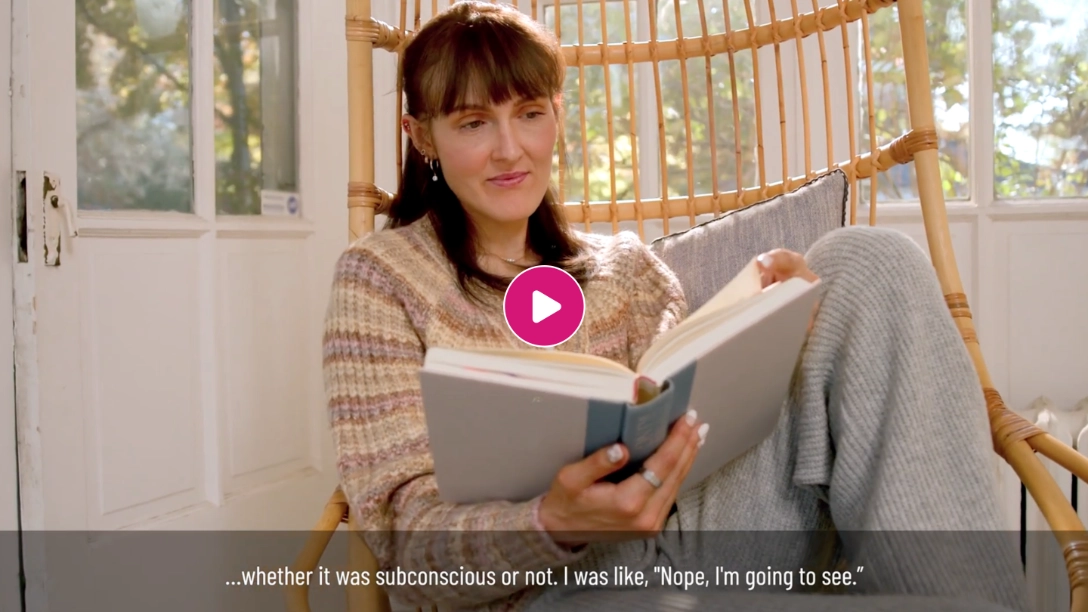
Light music under throughout.
ANNCR: REZUROCK
Meet one of our Journey Partners, Meredith M.
ANNCR: What if you could CHALLENGE chronic GVHD more than it challenges you?
USE
REZUROCK® (belumosudil) is a prescription medicine used to treat adults and children 12 years of age and older with chronic graft-versus-host disease (chronic GVHD) after you have received at least 2 prior treatments (systemic therapy) and they did not work. It is not known if REZUROCK is safe and effective in children less than 12 years old.
IMPORTANT SAFETY INFORMATION
Before taking REZUROCK, tell your healthcare provider about all of your medical conditions, including if you:
-
have kidney or liver problems.
Please see additional Important Safety Information at the end of the video.
Please see full Prescribing Information at the adjacent link or at REZUROCK.com.
MEREDITH: I was first diagnosed with chronic graft-versus-host disease in April of 2022.
Before I had chronic graft-versus-host disease, I had just graduated college the year before.
ANNCR: Meredith was DETERMINED to confront her symptoms with resolve
MEREDITH: I would say there's a little bit of defiance with [some of the symptoms that I was experiencing]. It made me really angry. I had perfect vision my entire life, all 23 years.
…whether it was subconscious or not. I was like, "Nope, I'm going to see.”
…we'll try and make out the letters. But it was defiance with it.
ANNCR: Early on, there were more QUESTIONS than answers
MEREDITH: When they first told me about the chronic graft-versus-host disease, I think one of my first questions was, how long is this going to last? How long is this going to take? When am I going to be better?
Some of the symptoms that I was experiencing were cough, swelling in my legs, forearms, hands, joint pain, shortness of breath.
ANNCR: Meredith was running out of OPTIONS
MEREDITH: I felt like I was just falling deeper and deeper down into nothing's going to work. How do I know this is going to work? And so it was a little disheartening.
ANNCR: REZUROCK turned out to be the therapy she was searching for
MEREDITH: I first heard about REZUROCK from my doctor.
It was something new to them.
And so they brought REZUROCK up.
My life has changed since starting taking REZUROCK.
ANNCR: Meredith has experienced side effects while taking REZUROCK, including facial swelling, chronic cough, nausea, bruising, bone pain and an increased risk of infection.
ANNCR: Meredith's life still has its CHALLENGES
MEREDITH: It's a lot of planning around my health and physical therapy and making sure that I stay on top of everything.
ANNCR: Meredith still has her RESOLVE
MEREDITH: I wish I can reach a spot where I can go back to school. I wanted to be a nurse, and being in the hospital has just solidified that fact for me.
ANNCR: Her journey has given a PERSPECTIVE worth sharing
MEREDITH: I was inspired to become a Journey Partner probably because, when I had first looked at REZUROCK, I was confused and felt disoriented about what was going on and everything that I was experiencing. I felt lost.
…I just don't want anyone else to have to suffer if they don't have to.
ANNCR: And COURAGE for others to challenge chronic GVHD
MEREDITH: I feel like it's easy to just want to give in and not want to fight anymore, but it's not worth that. You should continue to work towards goals, set long-term goals. That's what I have been doing.
ANNCR: Today, Meredith is finding her way forward with a GRATEFUL heart
MEREDITH: There's a lot of things to be happy for and grateful for that bring me happiness, like walking in the fall with the leaves crunching, the smell of someone having a bonfire.
I got my Great Pyrenees, Nova, before my transplant…I did have her registered as an emotional support dog, and she's helped me through so much.
Getting to spend time with my family. They have been a big supporter with me through all this.
ANNCR: Connect with the chronic GVHD community, and explore patient journeys at REZUROCK.com.
ANNCR: Patient stories reflect the real-life experiences of persons diagnosed with cGVHD who have been prescribed REZUROCK. However, individual experiences may vary. Patient stories are not necessarily representative of what another person using REZUROCK may experience. This patient was compensated for their time creating this content.
ANNCR ISI VO:
USE
REZUROCK® (belumosudil) is a prescription medicine used to treat adults and children 12 years of age and older with chronic graft-versus-host disease (chronic GVHD) after you have received at least 2 prior treatments (systemic therapy) and they did not work. It is not known if REZUROCK is safe and effective in children less than 12 years old.
IMPORTANT SAFETY INFORMATION
Before taking REZUROCK, tell your healthcare provider about all of your medical conditions, including if you:
-
have kidney or liver problems.
-
are pregnant or plan to become pregnant. REZUROCK can harm your unborn baby. If you are able to become pregnant, your healthcare provider will do a pregnancy test before starting treatment with REZUROCK. Tell your healthcare provider if you become pregnant or think you may be pregnant during treatment with REZUROCK.
-
Females who can become pregnant should use effective birth control during treatment with REZUROCK and for 1 week after the last dose.
-
Males with female partners who can become pregnant should use effective birth control during treatment with REZUROCK and for 1 week after the last dose.
-
-
are breastfeeding or plan to breastfeed. It is not known if REZUROCK passes into breast milk. Do not breastfeed during treatment with REZUROCK and for 1 week after the last dose.
Tell your healthcare provider about all the medicines you take, including prescription and over-the-counter medicines, vitamins, and herbal supplements. REZUROCK may affect the way other medicines work, and other medicines may affect the way REZUROCK works.
Know the medicines you take. Keep a list of them to show your healthcare provider and pharmacist when you get a new medicine.
How should I take REZUROCK?
-
Take REZUROCK exactly as your healthcare provider tells you to take it.
-
Do not change your dose or stop taking REZUROCK without first talking to your healthcare provider.
-
Take REZUROCK 1 time a day with a meal.
-
Take REZUROCK at about the same time each day.
-
Swallow REZUROCK tablets whole with a glass of water.
-
Do not cut, crush, or chew REZUROCK tablets.
-
Your healthcare provider will do blood tests to check your liver at least 1 time a month during treatment with REZUROCK. If you miss a dose of REZUROCK, take it as soon as you remember on the same day. Take your next dose of REZUROCK at your regular time on the next day. Do not take extra doses of REZUROCK to make up for a missed dose.
-
If you take too much REZUROCK, call your healthcare provider or go to the nearest hospital emergency room right away.
What are the possible side effects of REZUROCK?
The most common side effects of REZUROCK include:
-
infections
-
tiredness or weakness
-
nausea
-
diarrhea
-
shortness of breath
-
cough
-
swelling
-
bleeding
-
stomach (abdominal) pain
-
muscle or bone pain
-
headache
-
high blood pressure
Your healthcare provider may change your dose of REZUROCK, temporarily stop, or permanently stop treatment with REZUROCK if you have certain side effects.
REZUROCK may affect fertility in males and females. Talk to your healthcare provider if this is a concern for you.
These are not all the possible side effects of REZUROCK. Call your doctor for medical advice about side effects.
You are encouraged to report side effects of prescription drugs to the FDA. Visit
www.FDA.gov/medwatch or call 1-800-FDA-1088. You may also contact Kadmon Pharmaceuticals, LLC, a Sanofi Company, at 1-800-633-1610 to report side effects.
Please see full Prescribing Information at the adjacent link or at REZUROCK.com.
© 2024 Sanofi. All rights reserved.
REZUROCK is manufactured by Kadmon Pharmaceuticals, LLC, a Sanofi company.
REZUROCK and Sanofi are registered trademarks of Sanofi or an affiliate.
MAT-US-2405154-v1.0-09/2024
All patients were compensated by Sanofi. Patient stories reflect the real-life experiences of persons diagnosed with cGVHD who have been prescribed REZUROCK. However, individual experiences may vary. Patient stories are not necessarily representative of what another person using REZUROCK may experience.
cGVHD, chronic graft-versus-host disease; GVHD, graft-versus-host disease.
USE AND IMPORTANT SAFETY INFORMATION
REZUROCK® (belumosudil) is a prescription medicine used to treat adults and children 12 years of age and older with chronic graft-versus-host disease (chronic GVHD) after you have received at least 2 prior treatments (systemic therapy) and they did not work. It is not known if REZUROCK is safe and effective in children less than 12 years old.
Before taking REZUROCK, tell your healthcare provider about all of your medical conditions, including if you:
have kidney or liver problems.
are pregnant or plan to become pregnant. REZUROCK can harm your unborn baby. If you are able to become pregnant, your healthcare provider will do a pregnancy test before starting treatment with REZUROCK. Tell your healthcare provider if you become pregnant or think you may be pregnant during treatment with REZUROCK.
Females who can become pregnant should use effective birth control during treatment with REZUROCK and for 1 week after the last dose.
Males with female partners who can become pregnant should use effective birth control during treatment with REZUROCK and for 1 week after the last dose.
are breastfeeding or plan to breastfeed. It is not known if REZUROCK passes into breast milk. Do not breastfeed during treatment with REZUROCK and for 1 week after the last dose.
Tell your healthcare provider about all the medicines you take, including prescription and over-the-counter medicines, vitamins, and herbal supplements. REZUROCK may affect the way other medicines work, and other medicines may affect the way REZUROCK works.
Know the medicines you take. Keep a list of them to show your healthcare provider and pharmacist when you get a new medicine.
How should I take REZUROCK?
Take REZUROCK exactly as your healthcare provider tells you to take it.
Do not change your dose or stop taking REZUROCK without first talking to your healthcare provider.
Take REZUROCK 1 time a day with a meal.
Take REZUROCK at about the same time each day.
Swallow REZUROCK tablets whole with a glass of water.
Do not cut, crush, or chew REZUROCK tablets.
Your healthcare provider will do blood tests to check your liver at least 1 time a month during treatment with REZUROCK.
If you miss a dose of REZUROCK, take it as soon as you remember on the same day. Take your next dose of REZUROCK at your regular time on the next day. Do not take extra doses of REZUROCK to make up for a missed dose.
If you take too much REZUROCK, call your healthcare provider or go to the nearest hospital emergency room right away.
What are the possible side effects of REZUROCK?
The most common side effects of REZUROCK include:
infections
tiredness or weakness
nausea
diarrhea
shortness of breath
cough
swelling
bleeding
stomach (abdominal) pain
muscle or bone pain
headache
high blood pressure
Your healthcare provider may change your dose of REZUROCK, temporarily stop, or permanently stop treatment with REZUROCK if you have certain side effects.
REZUROCK may affect fertility in males and females. Talk to your healthcare provider if this is a concern for you.
These are not all the possible side effects of REZUROCK. Call your doctor for medical advice about side effects.
Please see full Prescribing Information.
You are encouraged to report side effects of prescription drugs to the FDA. Visit www.FDA.gov/medwatch or call 1-800-FDA-1088. You may also contact Kadmon Pharmaceuticals, LLC, a Sanofi Company, at 1-800-633-1610 to report side effects.
USE AND IMPORTANT SAFETY INFORMATION
REZUROCK® (belumosudil) is a prescription medicine used to treat adults and children 12 years of age and older with chronic graft-versus-host disease (chronic GVHD) after you have received at least 2 prior treatments (systemic therapy) and they did not work. It is not known if REZUROCK is safe and effective in children less than 12 years old.
Before taking REZUROCK, tell your healthcare provider about all of your medical conditions, including if you:
have kidney or liver problems.
are pregnant or plan to become pregnant. REZUROCK can harm your unborn baby. If you are able to become pregnant, your healthcare provider will do a pregnancy test before starting treatment with REZUROCK. Tell your healthcare provider if you become pregnant or think you may be pregnant during treatment with REZUROCK.
Females who can become pregnant should use effective birth control during treatment with REZUROCK and for 1 week after the last dose.
Males with female partners who can become pregnant should use effective birth control during treatment with REZUROCK and for 1 week after the last dose.
are breastfeeding or plan to breastfeed. It is not known if REZUROCK passes into breast milk. Do not breastfeed during treatment with REZUROCK and for 1 week after the last dose.
Tell your healthcare provider about all the medicines you take, including prescription and over-the-counter medicines, vitamins, and herbal supplements. REZUROCK may affect the way other medicines work, and other medicines may affect the way REZUROCK works.
Know the medicines you take. Keep a list of them to show your healthcare provider and pharmacist when you get a new medicine.
How should I take REZUROCK?
Take REZUROCK exactly as your healthcare provider tells you to take it.
Do not change your dose or stop taking REZUROCK without first talking to your healthcare provider.
Take REZUROCK 1 time a day with a meal.
Take REZUROCK at about the same time each day.
Swallow REZUROCK tablets whole with a glass of water.
Do not cut, crush, or chew REZUROCK tablets.
Your healthcare provider will do blood tests to check your liver at least 1 time a month during treatment with REZUROCK.
If you miss a dose of REZUROCK, take it as soon as you remember on the same day. Take your next dose of REZUROCK at your regular time on the next day. Do not take extra doses of REZUROCK to make up for a missed dose.
If you take too much REZUROCK, call your healthcare provider or go to the nearest hospital emergency room right away.
What are the possible side effects of REZUROCK?
The most common side effects of REZUROCK include:
infections
tiredness or weakness
nausea
diarrhea
shortness of breath
cough
swelling
bleeding
stomach (abdominal) pain
muscle or bone pain
headache
high blood pressure
Your healthcare provider may change your dose of REZUROCK, temporarily stop, or permanently stop treatment with REZUROCK if you have certain side effects.
REZUROCK may affect fertility in males and females. Talk to your healthcare provider if this is a concern for you.
These are not all the possible side effects of REZUROCK. Call your doctor for medical advice about side effects.
Please see full Prescribing Information.
You are encouraged to report side effects of prescription drugs to the FDA. Visit www.FDA.gov/medwatch or call 1-800-FDA-1088. You may also contact Kadmon Pharmaceuticals, LLC, a Sanofi Company, at 1-800-633-1610 to report side effects.
USE AND IMPORTANT SAFETY INFORMATION
REZUROCK® (belumosudil) is a prescription medicine used to treat adults and children 12 years of age and older with chronic graft-versus-host disease (chronic GVHD) after you have received at least 2 prior treatments (systemic therapy) and they did not work. It is not known if REZUROCK is safe and effective in children less than 12 years old.
Before taking REZUROCK, tell your healthcare provider about all of your medical conditions, including if you:
have kidney or liver problems.
are pregnant or plan to become pregnant. REZUROCK can harm your unborn baby. If you are able to become pregnant, your healthcare provider will do a pregnancy test before starting treatment with REZUROCK. Tell your healthcare provider if you become pregnant or think you may be pregnant during treatment with REZUROCK.
Females who can become pregnant should use effective birth control during treatment with REZUROCK and for 1 week after the last dose.
Males with female partners who can become pregnant should use effective birth control during treatment with REZUROCK and for 1 week after the last dose.
are breastfeeding or plan to breastfeed. It is not known if REZUROCK passes into breast milk. Do not breastfeed during treatment with REZUROCK and for 1 week after the last dose.
Tell your healthcare provider about all the medicines you take, including prescription and over-the-counter medicines, vitamins, and herbal supplements. REZUROCK may affect the way other medicines work, and other medicines may affect the way REZUROCK works.
Know the medicines you take. Keep a list of them to show your healthcare provider and pharmacist when you get a new medicine.
How should I take REZUROCK?
Take REZUROCK exactly as your healthcare provider tells you to take it.
Do not change your dose or stop taking REZUROCK without first talking to your healthcare provider.
Take REZUROCK 1 time a day with a meal.
Take REZUROCK at about the same time each day.
Swallow REZUROCK tablets whole with a glass of water.
Do not cut, crush, or chew REZUROCK tablets.
Your healthcare provider will do blood tests to check your liver at least 1 time a month during treatment with REZUROCK.
If you miss a dose of REZUROCK, take it as soon as you remember on the same day. Take your next dose of REZUROCK at your regular time on the next day. Do not take extra doses of REZUROCK to make up for a missed dose.
If you take too much REZUROCK, call your healthcare provider or go to the nearest hospital emergency room right away.
What are the possible side effects of REZUROCK?
The most common side effects of REZUROCK include:
infections
tiredness or weakness
nausea
diarrhea
shortness of breath
cough
swelling
bleeding
stomach (abdominal) pain
muscle or bone pain
headache
high blood pressure
Your healthcare provider may change your dose of REZUROCK, temporarily stop, or permanently stop treatment with REZUROCK if you have certain side effects.
REZUROCK may affect fertility in males and females. Talk to your healthcare provider if this is a concern for you.
These are not all the possible side effects of REZUROCK. Call your doctor for medical advice about side effects.
Please see full Prescribing Information.
You are encouraged to report side effects of prescription drugs to the FDA. Visit www.FDA.gov/medwatch or call 1-800-FDA-1088. You may also contact Kadmon Pharmaceuticals, LLC, a Sanofi Company, at 1-800-633-1610 to report side effects.